WhatsApp Business lets truck, van and machinery dealers answer buyers where they already are, with photos, walk-around videos and voice notes. To avoid losing leads, run it on a company number rather than personal phones, message only people who opted in, and log every chat to the buyer's record next to email and calls.
Key takeaways
- Export and cross-border buyers often prefer WhatsApp, because a walk-around video or a voice note says more than a long email.
- A salesperson's personal number is a business risk: when they leave, the chat history and often the customer leave with them.
- The WhatsApp Business app suits one phone and a small team; the WhatsApp Business Platform (API) adds shared access and integrations, with template rules outside the 24-hour window.
- Only message people who contacted you or agreed to it, and keep conversations in a business system rather than on private phones.
- One timeline per buyer keeps follow-up going when a salesperson is ill or on holiday.
Why do truck and machinery buyers prefer WhatsApp?
Because it lets them see the machine, hear the seller and decide quickly, from the phone they already use all day.
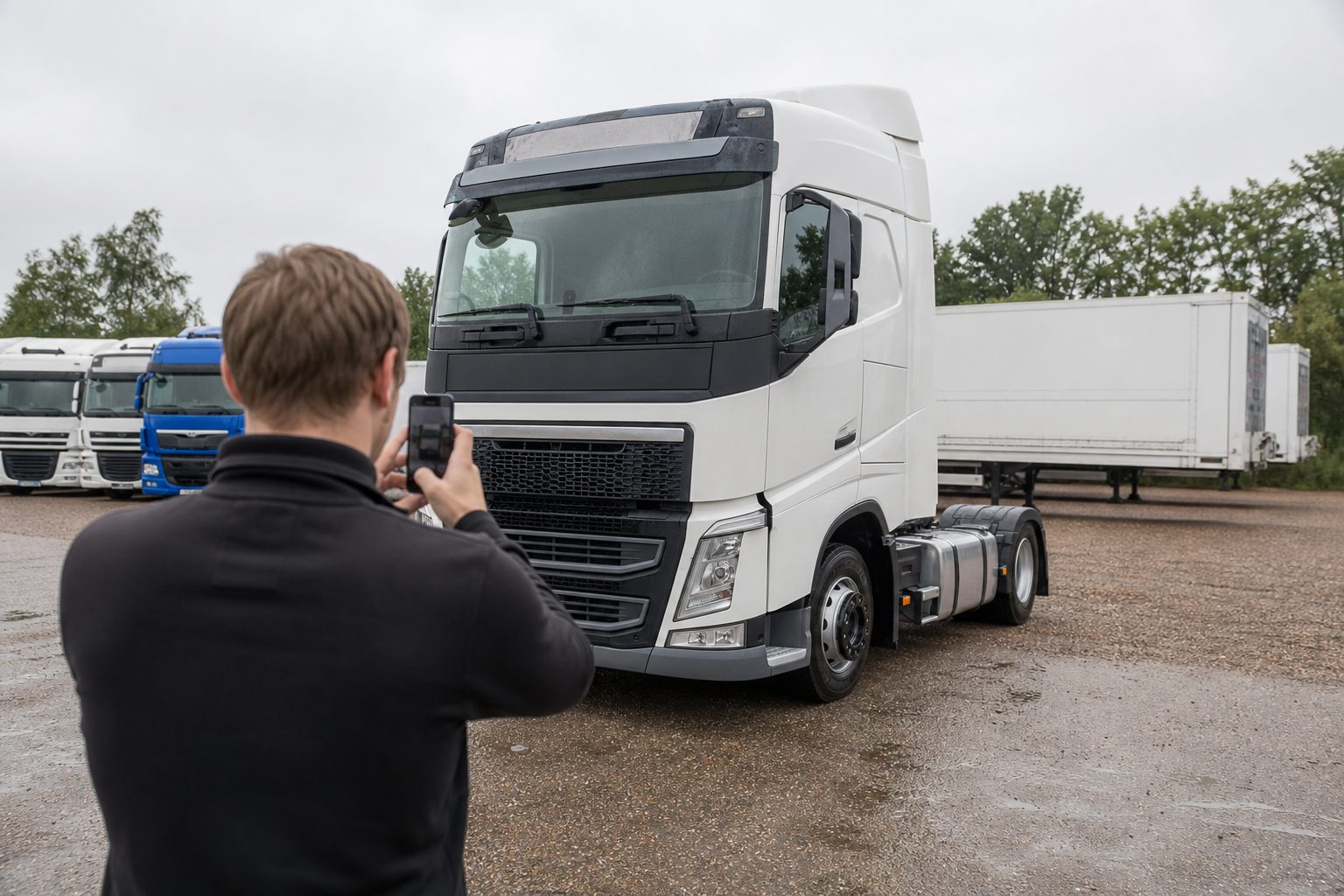
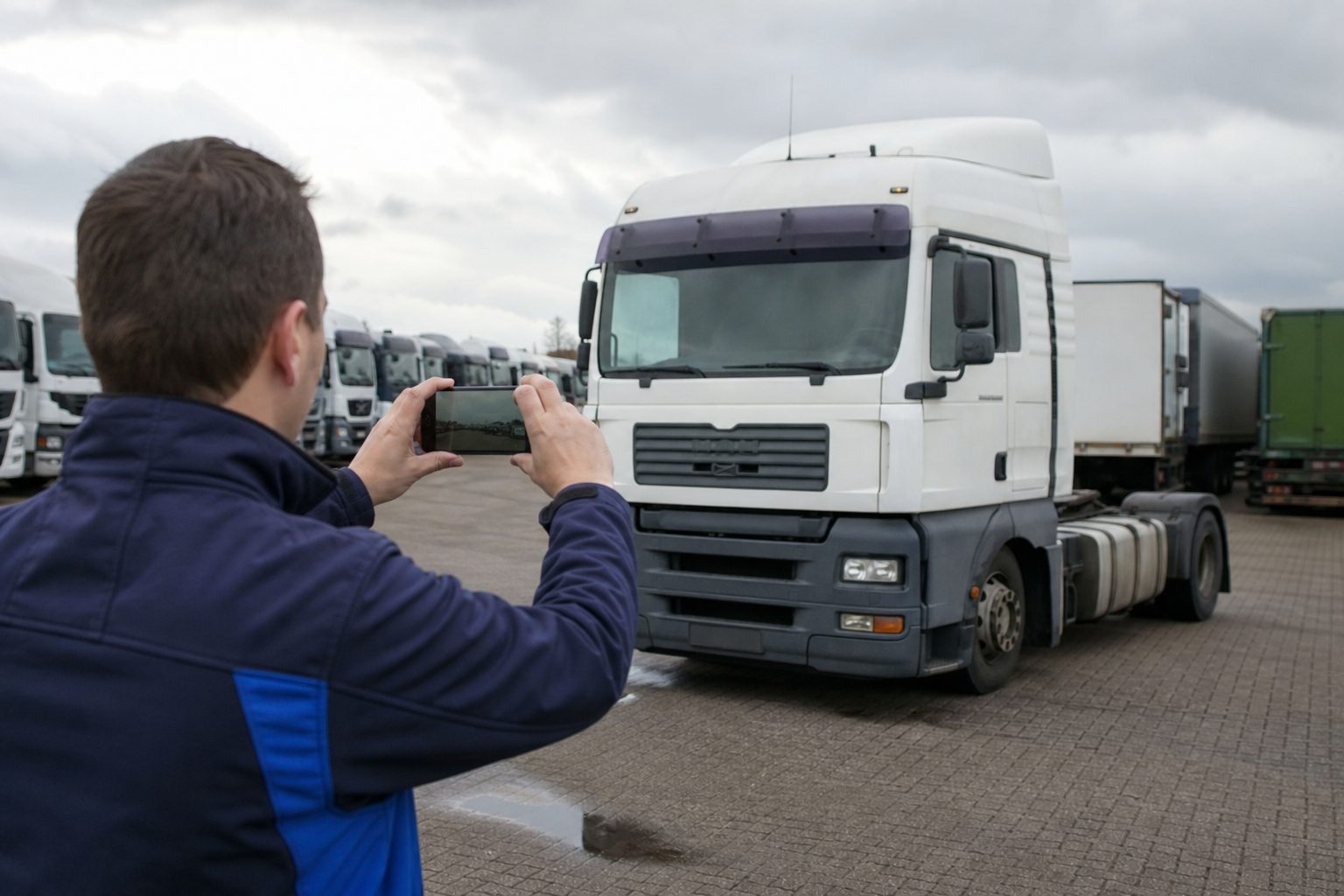
A buyer in Poland looking at a used tractor unit in Belgium will not drop by for a test drive. What they want is proof: a close-up of the tyres, the dashboard with the engine running, a short video of the chassis and the underside. WhatsApp puts all of that in one thread.
In export and cross-border trade especially, WhatsApp has practical advantages over email:
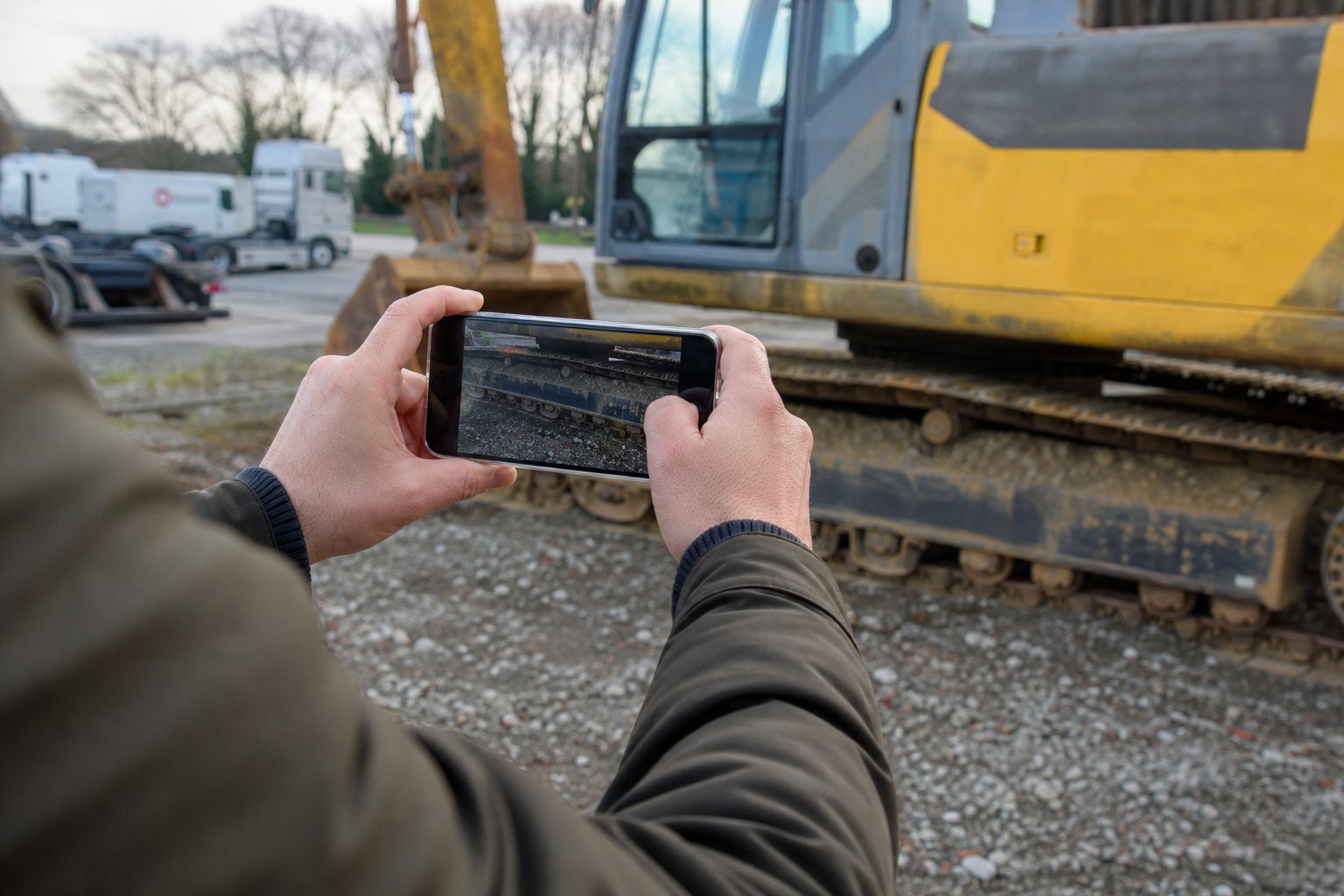
- Photos and walk-around videos: a slow walk around an excavator, showing the undercarriage, the bucket pins and the cab, answers questions before they are asked.
- Voice notes: many buyers, drivers and owner-operators among them, would rather talk than type, especially in a second language.
- Speed: the message lands on the phone, not in a mailbox someone checks at the end of the day.
- Habit: in many countries, WhatsApp is simply how business gets done, from the yard to the auction.
For the dealer, that means more direct contact, but also more conversations scattered across more phones. A marketplace inquiry by email is easy to track. A voice note sent late in the evening to a salesperson's mobile is not, unless you have planned for it. Whether you sell trailers, agricultural machinery or forklifts (see our industries), the pattern is the same.
What goes wrong when salespeople use their personal WhatsApp?
The conversations, and often the customer, end up belonging to a phone rather than to the dealership, so the business loses control of its own leads.
It starts innocently. A salesperson gives their mobile number to a buyer at a trade fair, or replies from their own phone because it is quicker. A few months later, a good part of their deals run through a private device.
- The salesperson leaves: the history, the photos, the agreed prices and the buyer's trust leave too. The buyer keeps writing to the same number, but its owner now works for a competitor.
- No overview for the manager: who answered the Danish buyer about the low-loader? Was the offer sent? Nobody knows without asking for someone's phone.
- No cover for illness or holidays: the buyer writes, gets no answer and buys elsewhere.
- One deal in fragments: the marketplace inquiry sits in a mailbox, the phone call in someone's memory, the WhatsApp chat on a private phone.
- A privacy risk: customer data on a personal device, between the family group and the football team chat, outside any company policy.
A lead that lives on a salesperson's private phone is not a company asset. It is a personal contact the company happens to pay for.

What is the difference between the WhatsApp Business app and the WhatsApp Business Platform?
The app is a phone application for one business number run by a small team, while the Platform, often called the API, connects WhatsApp to your own software so a whole team can work from shared systems.
The WhatsApp Business app looks like ordinary WhatsApp, with a business profile, a catalogue, labels, quick replies and away messages on top. For a small dealer with one or two salespeople on one company number, it does the job. It can be linked to a limited number of devices, but there is no real team inbox, no assignment and no link to your CRM.
The WhatsApp Business Platform is not an app: you use it through software connected to it. You get access through Meta directly or through a provider, then plug it into a CRM or a lead manager, for example. That is what makes shared team access, routing and integrations possible.
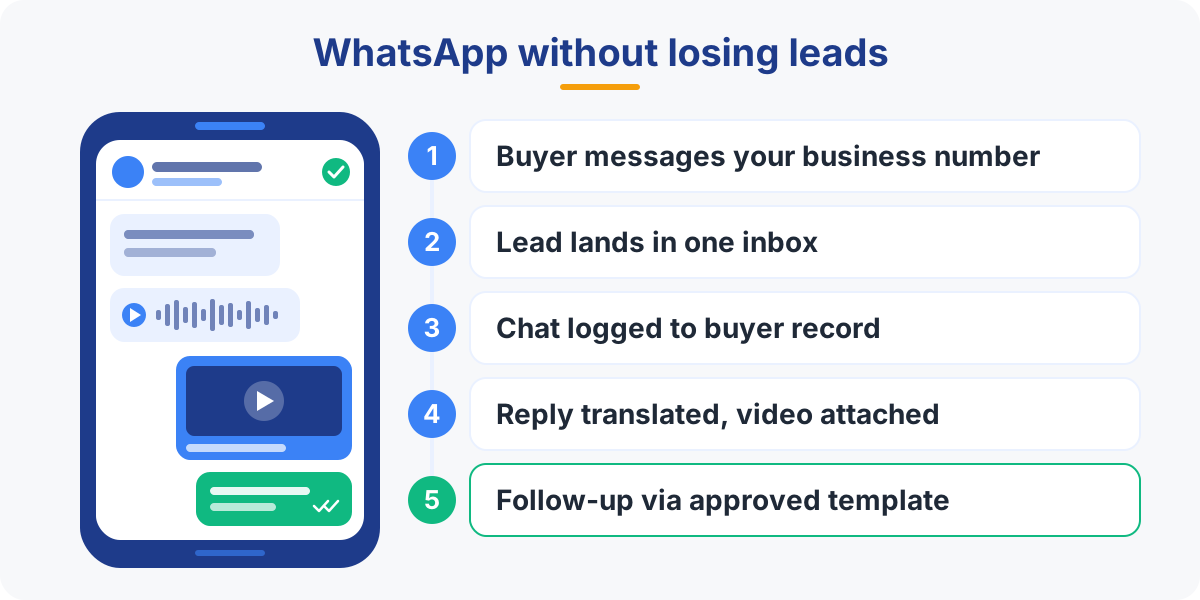
One rule matters for dealers on the Platform: the 24-hour customer service window. When a buyer messages you, you can reply freely for 24 hours, and each new message from the buyer restarts that window. After that, you can only reopen the conversation with a message template approved in advance by Meta, such as a follow-up on a quote. Costs and conditions are set by Meta and change over time: check them with your provider.
| Criterion | Personal WhatsApp | WhatsApp Business app | WhatsApp Business Platform (API) |
|---|---|---|---|
| Who owns the number | The salesperson | The dealership | The dealership |
| Team access | None | Limited, no assignment | Shared, through connected software |
| Link to CRM or lead manager | No | No | Yes, through a provider or software |
| Messaging rules | Any time, outside any policy | Any time (consent still required) | Free-form within 24 hours of the buyer's message, otherwise approved templates |
| History when someone leaves | Leaves with the salesperson | Stays on the company phone | Stays in the business system |
| Best suited to | Private use | Small dealer, one number | Sales teams, several branches, export desk |
Tip: Prepare your templates before you need them, in every language you sell in, so a follow-up never has to wait for approval.
What do GDPR and consent mean for WhatsApp in a dealership?
Only message people who contacted you or clearly agreed to hear from you on WhatsApp, and keep their data in a business system you control.
The GDPR applies to WhatsApp like any other channel: a phone number attached to a name is personal data. In practice, for a dealer, that means:
- Opt-in first. A buyer who writes to you on WhatsApp about a specific van has opened the conversation. A number from a business card picked up at a fair, or from an old list, is not consent to receive WhatsApp promotions.
- Record where consent comes from. Note when and how the buyer agreed: an inquiry form with a WhatsApp checkbox, a message from the buyer, a verbal agreement noted on their record.
- Make stopping easy. If a buyer says “stop”, stop, and note it on their record so a colleague does not message them next week.
- Keep data in a business system. Chats on private phones cannot be secured, exported or deleted on request. A central record can.
- Mention it in your privacy notice. Say that you use WhatsApp, for what purpose and how long you keep messages.
Meta's business rules for the Platform also require opt-in before you send messages on your own initiative. This article is not legal advice: check the details with your data protection officer or adviser.
What are good practices for selling trucks and machinery on WhatsApp?
Treat WhatsApp as a full sales channel: fast, structured, documented and in the buyer's language.
Answer fast, with substance
A quick “thanks, I will get back to you” is good; a quick answer with the spec sheet attached is better. Agree a response-time standard as a team, including outside office hours.
Use quick replies and templates
Prepare standard answers for the questions that come up every day: availability, location, delivery and export documents, inspection, financing contact. Personalise the first line and keep the facts consistent.
Send a structured spec sheet and a video
For each unit: a short spec sheet (make, model, year, hours or mileage, main options, location, price or “price on request”) plus a walk-around video. Same order every time, so the buyer can compare.
Translate for foreign buyers
A buyer who reads your message in their own language trusts you sooner. Translate carefully and keep the original text for reference.
Log every chat to the buyer's record
If it is not in the file, it did not happen. The next colleague must be able to see what was said, sent and promised.
Tip: Film the walk-around video once per unit, holding the phone horizontally, with the engine running and a clear shot of the identification plate, then reuse it for every buyer who asks.
How does a lead manager bring WhatsApp, email, SMS and calls into one timeline?
It gathers every channel into one record per buyer, so the whole team sees the full conversation and can reply in the right language from one place.
A lead manager, sometimes called a lead copilot or a CRM for leads, sits between your channels and your sales team. Instead of a marketplace email in one mailbox, a missed call on a mobile and a WhatsApp chat on a private phone, the buyer has one record with one timeline.
Aéllo Copilot does this for dealers of trucks, trailers, vans, construction and agricultural machinery:
- leads from marketplace email inquiries, your website, phone calls and WhatsApp arrive in one inbox, deduplicated so the same buyer never appears twice;
- each new lead is routed instantly by language, marketplace, price or channel, so the Spanish buyer reaches the colleague who speaks Spanish;
- email, SMS and WhatsApp sit in one timeline per buyer, with templates, AI-assisted replies and automatic two-way translation;
- an instant first reply, after-hours and weekend cover, and follow-ups when a buyer stops replying keep the conversation alive, while a missed-call list and reminders handle the rest.
See the full list of features. Because Aéllo Copilot syncs both ways with the CRM you already use (see integrations), your existing system stays up to date. Performance reporting by channel also shows how WhatsApp compares with your other sources.
In the end, the tool matters less than the principle: a WhatsApp conversation becomes part of the dealership's sales file. Visible to the manager, available to whoever covers, and measurable like any other source.
Want every WhatsApp chat in the same timeline as your emails and calls?